
 |
|
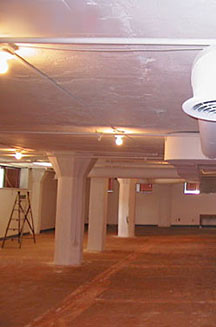
The Problem. This 3,700-square-foot basement was a raw space
with concrete floors and windows on two sides. The challenge was to transform it
into a livable residential unit that created privacy for the homeowners while
letting in as much as light as possible. |
When a young professional bought the last loft-style apartment in a 1912
downtown Denver building, he turned to architect Doug Walter. The transformation
needed to bedramatic. It was a basement apartment. "The raw apartment was
spectacular," Walter says. "It was a big, open space with concrete floors and
large columns. We knew right away that we'd want to keep it open."
The key issues of light and privacy were apparent. The 3,700-square-foot
basement had windows on two sides that began about five feet up the wall.
"Letting in as much light as those windows could was critical," Walter says,
"but preserving privacy was also an issue. The idea of using shoji-type
screening seemed natural." Another design element allowing for natural light
throughout was to have most walls not extend to the ceiling.
From a space planning perspective, the rooms were logically positioned. The
master bedroom was placed in the most private corner of the apartment, away from
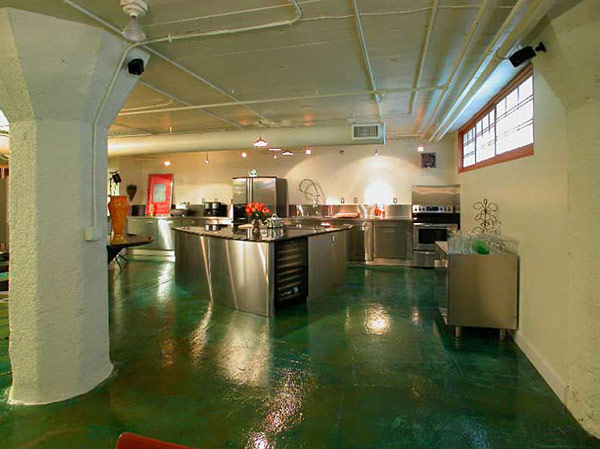
the windows. The same logic put the large kitchen, designed as the social hub of
the apartment, in the corner with the best natural light. A curved wall that
conceals storage was designed to draw people from the entryway into the
apartment, creating a sense of movement through the space.
|
|
The Solution.
The rooms were logically positioned according to privacy and natural light.
Concrete floors in the public spaces became an artistic design element. The
master bedroom was placed behind a curved wall for privacy while the kitchen was
positioned in the corner with the most natural light. |
Not surprising for a basement unit, the plumbing was a hurdle. Getting the drain
lines in place required trenching through the floor slab. From a design
standpoint, the concrete floor turned out to be an asset. The homeowner decided
he liked its industrial feel and commissioned an artist to create a rich,
dramatic skim coating in shades of green.
Also
a challenge was to create a highly effective artificial lighting plan. "We knew
that careful selection of electrical lighting would be very important," Walter
says. "We were limited in our choices because we didn't want to sacrifice any of
the 8-foot-6-inch ceiling height with dropped ceilings that would have allowed
us to install recessed fixtures."
Task and mood lighting was carefully integrated into the overall space. Track
lighting was utilized in several areas, supplemented by wall sconces and lamps.
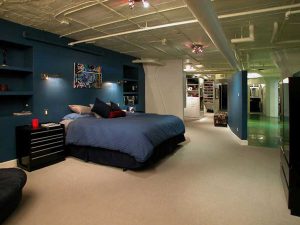
"We specified halogens throughout because they offer more lumens per watt and a
pleasing light that's whiter than others." The net effect: soft and variable
illumination throughout.
Today, several words leap to mind after time spent in this comfortable,
wonderfully eclectic home. Basement is not on the list.